


Hey there! As a supplier of AC condenser motors, I've had the chance to work with all sorts of these motors. Today, I'm gonna break down the different types of AC condenser motors for you.
Permanent Split Capacitor (PSC) Motors
PSC motors are one of the most common types out there. They're pretty simple in design, which is one of the reasons they're so popular. These motors use a capacitor that stays in the circuit all the time. This capacitor helps in creating a phase shift, which is essential for the motor to start and run smoothly.
The advantage of PSC motors is their reliability. They don't have a lot of moving parts, so there's less that can go wrong. They're also energy - efficient, which is a big plus in today's world where everyone's looking to save on energy costs. You'll often find PSC motors in smaller AC units, like window air conditioners. They're great for applications where the motor doesn't need to start under a heavy load.
However, they do have some limitations. They don't have a high starting torque, so if you need a motor to start quickly under a heavy load, a PSC motor might not be the best choice. But for most standard AC condenser applications, they work just fine.
Capacitor Start Capacitor Run (CSCR) Motors
CSCR motors are a step up from PSC motors when it comes to starting torque. These motors use two capacitors: one for starting and one for running. The starting capacitor provides a big boost of power to get the motor up and running quickly, especially when there's a heavy load. Once the motor reaches a certain speed, the starting capacitor is disconnected from the circuit, and the running capacitor takes over to keep the motor running smoothly.
This type of motor is ideal for larger AC units where the compressor and the fan have to start under a significant load. They're more complex than PSC motors, but the extra complexity pays off in terms of performance. The downside is that they're more expensive and require more maintenance because of the additional capacitor and the switch that disconnects the starting capacitor.
Shaded - Pole Motors
Shaded - pole motors are the simplest and cheapest type of AC motor. They work based on the principle of a shaded coil that creates a magnetic field that lags behind the main magnetic field. This lag creates a rotating magnetic field that causes the motor to turn.
These motors are very reliable because they have few moving parts and no capacitors or brushes. They're also very quiet, which makes them suitable for applications where noise is a concern. However, they have a very low starting torque and are not very efficient. They're typically used in small, low - power AC units, like small fans in some AC systems. You can check out Axia Fan Motor for an example of a motor that might use a similar principle in a small - scale application.
Three - Phase Motors
Three - phase motors are used in large commercial and industrial AC systems. They operate on a three - phase power supply, which provides a more efficient and balanced power delivery compared to single - phase motors. These motors have a high starting torque and are very efficient, making them ideal for large compressors and fans in big AC units.
They're more expensive to install and require a three - phase power supply, which might not be available in all locations. But for large - scale applications where power and efficiency are crucial, three - phase motors are the way to go.
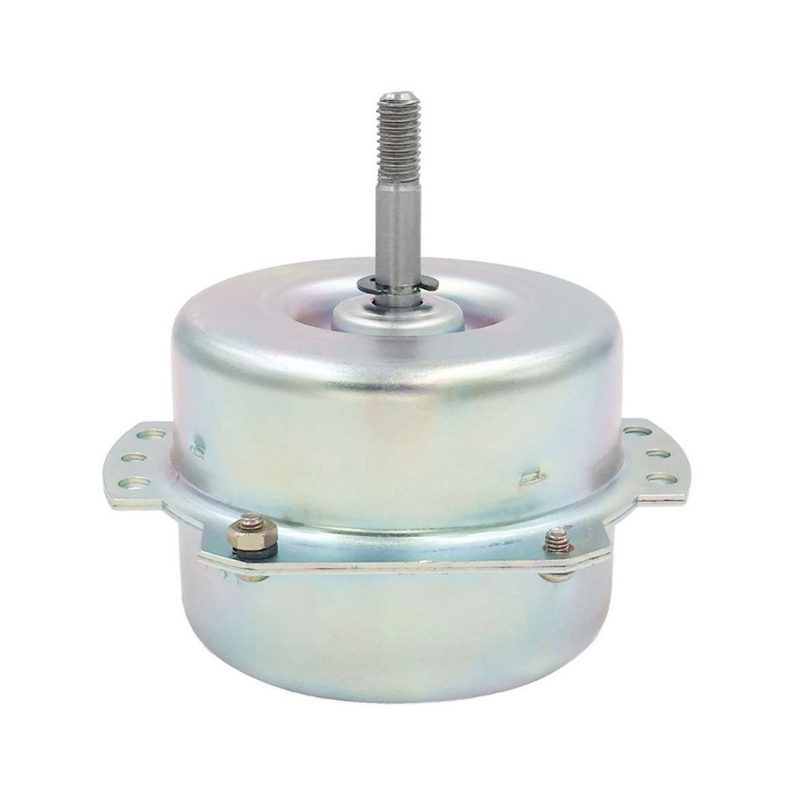

ECM (Electronically Commutated Motors)
ECM motors are the latest and greatest in AC condenser motor technology. These motors are electronically controlled, which means they can adjust their speed and power consumption based on the load. They're extremely energy - efficient, often saving up to 70% on energy costs compared to traditional motors.
ECMs are also very quiet and have a long lifespan. They can be programmed to operate at different speeds, which is great for AC systems that need to adjust to different cooling demands. However, they're the most expensive type of motor, and they require more advanced control systems. But if you're looking for a long - term, energy - saving solution, an ECM motor is definitely worth considering.
Selecting the Right Motor for Your AC Condenser
When it comes to choosing the right AC condenser motor, there are a few things you need to consider. First, think about the size of your AC unit. Smaller units can usually get by with a PSC or shaded - pole motor, while larger units will need a CSCR or three - phase motor.
The load that the motor will have to start and run under is also crucial. If there's a heavy load, you'll need a motor with a high starting torque, like a CSCR or a three - phase motor. Energy efficiency is another important factor. If you're looking to save on energy costs in the long run, an ECM motor might be the way to go, even though it's more expensive upfront.
Maintenance of AC Condenser Motors
No matter which type of AC condenser motor you choose, proper maintenance is key to keeping it running smoothly. Regularly clean the motor to prevent dust and debris from building up, which can cause overheating. Check the capacitors, if applicable, for signs of damage or leakage. Make sure the bearings are lubricated if they require it. And keep an eye on the motor's performance. If you notice any strange noises, vibrations, or a decrease in efficiency, it might be time to have the motor checked out by a professional.
Contact for Purchase and Consultation
If you're in the market for an AC condenser motor, I'm here to help. Whether you're not sure which type of motor is right for your application or you're ready to make a purchase, feel free to reach out. I've got a wide range of motors in stock, from small Stand Fan Motor to large, high - performance units. I can also provide you with all the technical details and advice you need to make the best decision for your AC system.
References
- "Electric Motors and Drives: Fundamentals, Types, and Applications" by Austin Hughes
- "Motor and Drive Troubleshooting" by Bill Schweitzer


