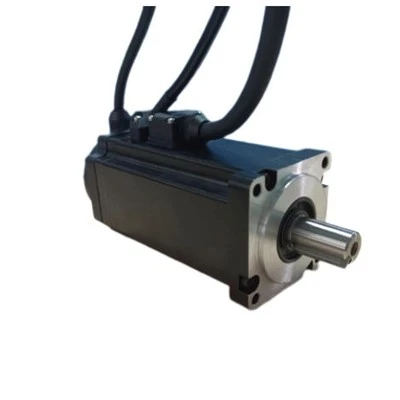
How Permanent Magnet Synchronous Generators Are Used in Wind Turbines
Permanent-magnet synchronous technology is widely used in modern electric machines, from industrial motors to wind-power generators.
In a wind turbine, however, the permanent-magnet machine normally operates as a generator, not as a motor. For this reason, the term Permanent Magnet Synchronous Generator (PMSG) is more accurate than PMSM when discussing the main power-generation unit inside a wind turbine.
The electromagnetic principles are closely related, but the direction of energy conversion is different.
A PMSM converts electrical energy into mechanical rotation. A PMSG does the opposite: the rotating wind-turbine drivetrain supplies mechanical energy to the generator, which converts it into electrical power.
Understanding this distinction makes it much easier to see where permanent-magnet technology fits into modern wind-power systems.
Where Does the Permanent-Magnet Generator Sit in a Wind Turbine?
Wind turns the turbine blades and rotor.
That mechanical rotation must then be converted into electricity by the generator.
There are two broad drivetrain arrangements.
Geared Wind Turbines
In a geared drivetrain, the turbine rotor turns relatively slowly.
A gearbox increases the rotational speed before mechanical power reaches the generator.
This allows the generator to operate at a higher rotational speed than the turbine rotor.
The purpose of the gearbox is therefore to match the mechanical speed requirements of the rotor and generator. It should not simply be described as "matching the grid frequency," because modern variable-speed turbines normally use power electronics between the generator and the grid.
Direct-Drive Wind Turbines
A direct-drive system removes the main gearbox.
The generator is connected much more directly to the turbine rotor and therefore has to operate at a much lower speed while producing high torque.
This changes the generator design significantly.
Direct-drive permanent-magnet generators are usually larger in diameter and use multiple magnetic poles so that useful electrical output can be produced at low rotational speed.
Why Use Permanent Magnets?
A permanent-magnet synchronous generator creates its rotor magnetic field with permanent magnets rather than a rotor excitation winding.
This offers several useful characteristics for wind-power applications.
No Rotor Excitation Current
Because the magnetic field is produced by permanent magnets, the rotor does not require a separate electrical excitation system.
This can reduce rotor electrical losses and simplify part of the generator structure.
Suitable for Low-Speed, High-Torque Designs
Permanent-magnet machines can be designed with many poles and high torque density.
That is particularly relevant to direct-drive wind systems, where generator speed is low and mechanical torque is high.
Compatible with Variable-Speed Operation
Wind speed changes continuously.
Operating the turbine at variable speed can allow the rotor to remain closer to its preferred aerodynamic operating condition over a wider range of wind conditions.
Permanent-magnet generators are commonly used with full-power electronic converters, allowing generator frequency to vary independently from grid frequency.
This makes variable-speed operation possible without requiring the mechanical rotor to run at one fixed synchronous speed tied directly to the grid.
What Role Does the Power Converter Play?
The generator is only one part of the wind turbine's electrical system.
In many permanent-magnet wind turbines, electrical power from the generator passes through a full-scale AC/DC/AC converter before reaching the grid.
This converter performs several important functions.
It allows the generator to operate at variable speed, converts variable-frequency generator output into grid-compatible electrical power, and provides control over active and reactive power at the turbine terminals.
This distinction matters because grid-support capability should not be attributed to the permanent magnets themselves.
The generator produces electrical power, while the converter and turbine control system manage how that power is delivered to the grid.

Direct Drive Does Not Mean "Always Better"
Removing the gearbox can reduce the number of drivetrain components and eliminate one major mechanical subsystem.
That can be attractive where maintenance access is difficult.
However, direct-drive generators also bring their own engineering challenges.
A low-speed generator generally needs a larger electromagnetic structure to produce the required torque. Permanent-magnet direct-drive systems may also use significant quantities of rare-earth magnetic material.
This is why both geared and direct-drive wind-turbine architectures continue to exist.
The appropriate choice depends on turbine rating, rotor speed, generator design, weight, maintenance strategy, material cost and overall system economics.
Where Axial-Flux Permanent-Magnet Technology Fits
Most people associate large wind generators with radial-flux machines, but axial-flux permanent-magnet technology is also relevant to compact and specialized generator designs.
In an axial-flux machine, magnetic flux travels primarily along the motor or generator axis rather than radially through a conventional cylindrical structure.
The architecture can offer high torque density and a relatively short axial length.
For smaller direct-drive generators or applications where packaging and torque density are important, this makes axial-flux technology worth considering.
Jiangnan Electric currently develops axial-flux permanent-magnet machines in addition to conventional PMSM products. The company's published axial-flux range covers multiple voltage, speed, cooling and mounting configurations.
The same electromagnetic platform can be relevant to both motor and generator development, but a motor product should not automatically be presented as a wind generator without application-specific electromagnetic, thermal and mechanical validation.

Jiangnan Electric and Permanent-Magnet Wind-Power Applications
Hangzhou Jiangnan Electric Motor Co., Ltd. currently manufactures several permanent-magnet synchronous motor families, including conventional PMSMs, low-speed high-torque designs and axial-flux permanent-magnet machines.
Some of the existing product platforms demonstrate characteristics that are also important in wind-power generator development.
For example, Jiangnan's JNPM520-45 platform is rated at 45 kW and 245 rpm with 1754 N·m rated torque. Although developed for an industrial direct-drive application rather than presented here as a wind-turbine generator, the combination of low speed and high torque illustrates the type of electromagnetic design challenge also found in direct-drive generation systems.
Jiangnan's axial-flux portfolio also includes permanent-magnet machines designed around compact axial structures and variable-speed operation.
The company's current website additionally lists permanent-magnet products for low-wind-speed and small- to medium-scale wind-power applications.
For a real wind-power project, however, the selection process should begin with generator requirements rather than choosing an existing motor only by rated power.
What Information Is Needed for a Wind-Power Generator Project?
Before evaluating a permanent-magnet generator, several operating conditions need to be defined.
Important information includes:
- rated electrical output;
- rated and maximum rotor speed;
- continuous and peak torque;
- required output voltage;
- generator frequency range;
- cooling method;
- mounting arrangement;
- shaft or direct-drive interface;
- expected ambient conditions;
- protection level;
- converter topology;
- continuous operating duty.
For a direct-drive project, rotor speed and torque are especially important because the generator must handle the turbine load without relying on a high-ratio gearbox.
For small and medium wind-power systems, packaging, generator weight, converter cost and maintenance requirements may also strongly affect the final design.
PMSM or PMSG: The Terminology Matters
Permanent-magnet synchronous motors and permanent-magnet synchronous generators are based on closely related electromagnetic principles.
But their operating roles are different.
A PMSM normally converts electrical energy into mechanical output.
A PMSG converts mechanical input into electrical energy.
In wind turbines, the main energy-conversion machine is therefore more accurately described as a PMSG.
For customers developing wind-power equipment, the important question is not simply whether an existing PMSM can be installed in a turbine.
The correct approach is to define the required generator speed, torque, voltage, thermal conditions, mechanical interface and converter system first, and then design or select the permanent-magnet machine around those requirements.
Disclaimer
The information in this article is provided for general reference only. Product specifications, performance, configuration options and suitability must be evaluated in detail for the intended application and actual operating conditions. Before selecting, purchasing or using a product, please confirm the relevant details with Jiangnan Electric and refer to the applicable technical documentation and agreed specifications. This article does not replace product-specific instructions or a professional engineering assessment.