Axial Flux vs Radial Flux Motors: When Is a Disc Motor the Better Fit?
Most industrial electric motors use a radial-flux design.
It is a mature, widely used structure that works well in pumps, fans, conveyors, compressors and countless other machines.
Axial-flux motors take a different approach.
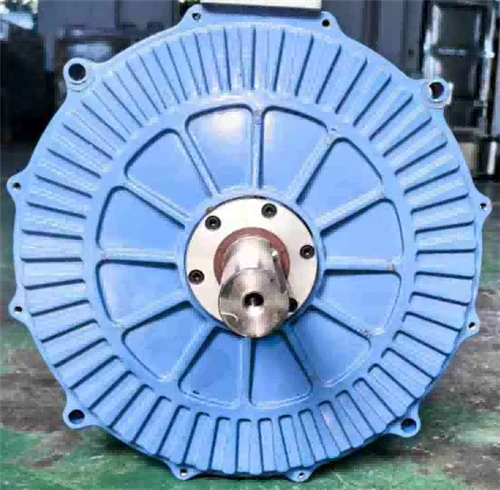
Instead of arranging the magnetic field mainly across the radius of a cylindrical motor, an axial-flux motor directs magnetic flux along the shaft axis. This creates the familiar flat, disc-shaped construction, which is why axial-flux motors are also commonly called disc motors.
The different geometry can create useful advantages, but it does not mean an axial-flux motor is automatically the right choice for every machine.
The real question is: What does the application need from the motor?
What Is the Main Difference Between Axial and Radial Flux?
The easiest difference to see is the shape.
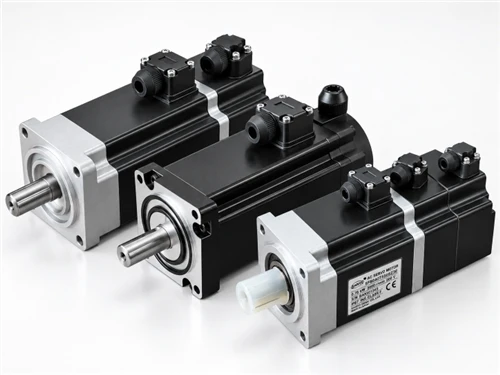
A conventional radial-flux motor generally has a longer cylindrical body. The rotor turns inside or around a stator, and magnetic flux travels mainly in a radial direction.
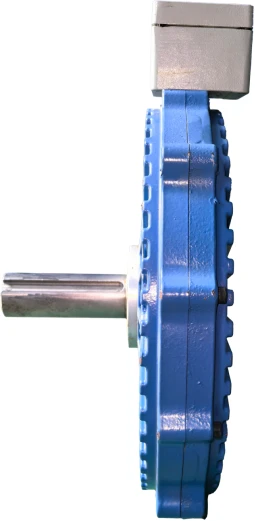
An axial-flux motor is typically wider and shorter.
Its active magnetic surfaces face each other across an axial air gap, allowing torque to be produced over a relatively large effective radius.
This geometry changes how the motor uses installation space.
A machine with plenty of axial room may have no reason to move away from a conventional radial motor.
But when axial length is limited, a disc-shaped motor can open up a different packaging option.
Why Motor Diameter Matters for Torque
Torque is not determined by motor power alone.
The radius at which electromagnetic force acts also matters.
Axial-flux motors can use a relatively large active diameter while keeping the motor short in the axial direction. This can make the architecture attractive for applications that need substantial torque without a long motor body.
That does not mean every axial-flux motor automatically produces more torque than every radial motor.
Motor diameter, magnetic loading, winding design, cooling and speed all affect the final result.
But the geometry gives designers another way to balance torque and installation space.
This is especially relevant in low-speed, high-torque applications.
Where Low-Speed, High-Torque Operation Becomes Useful
Many industrial systems use a high-speed motor together with a gearbox or other mechanical reduction stage.
The gearbox converts motor speed into lower output speed and higher output torque.
In some applications, an axial-flux permanent-magnet motor can be designed to operate closer to the required machine speed.
This can reduce the amount of mechanical reduction needed, or in some cases support a direct-drive arrangement.
Jiangnan Electric's current axial-flux and permanent-magnet product family includes several examples of this type of operating point.
The JNPM520-30 is rated at 30 kW and 245 rpm with 1,169 N·m rated torque, while the JNPM520-45 is rated at 45 kW and 245 rpm with 1,754 N·m rated torque. The same product family also includes higher-speed models such as the 7.5 kW JNPM275-7.5 at 1,450 rpm and the 15 kW JNPM275-15 at 3,000 rpm.
This range illustrates an important point: axial-flux technology is not limited to one speed range or one application.
The motor still needs to be designed around the actual torque-speed requirement.
A Real Direct-Drive Example: Beam Pumping Equipment
One of Jiangnan Electric's practical applications is the JNPM520-45 permanent-magnet disc motor used in a beam-pumping drive system.
The documented configuration is:
- rated power: 45 kW;
- rated speed: 245 rpm;
- rated torque: 1,754 N·m;
- supply voltage: 380 V;
- protection level: IP55;
- cooling: natural cooling;
- mounting: horizontal;
- shaft arrangement: keyed hollow shaft.
The low operating speed and high torque allow the motor to be integrated differently from a conventional high-speed industrial motor.
In this type of application, the value of the disc-motor architecture is not simply that the motor is "more advanced."
The practical benefit comes from matching the motor structure to the drivetrain.
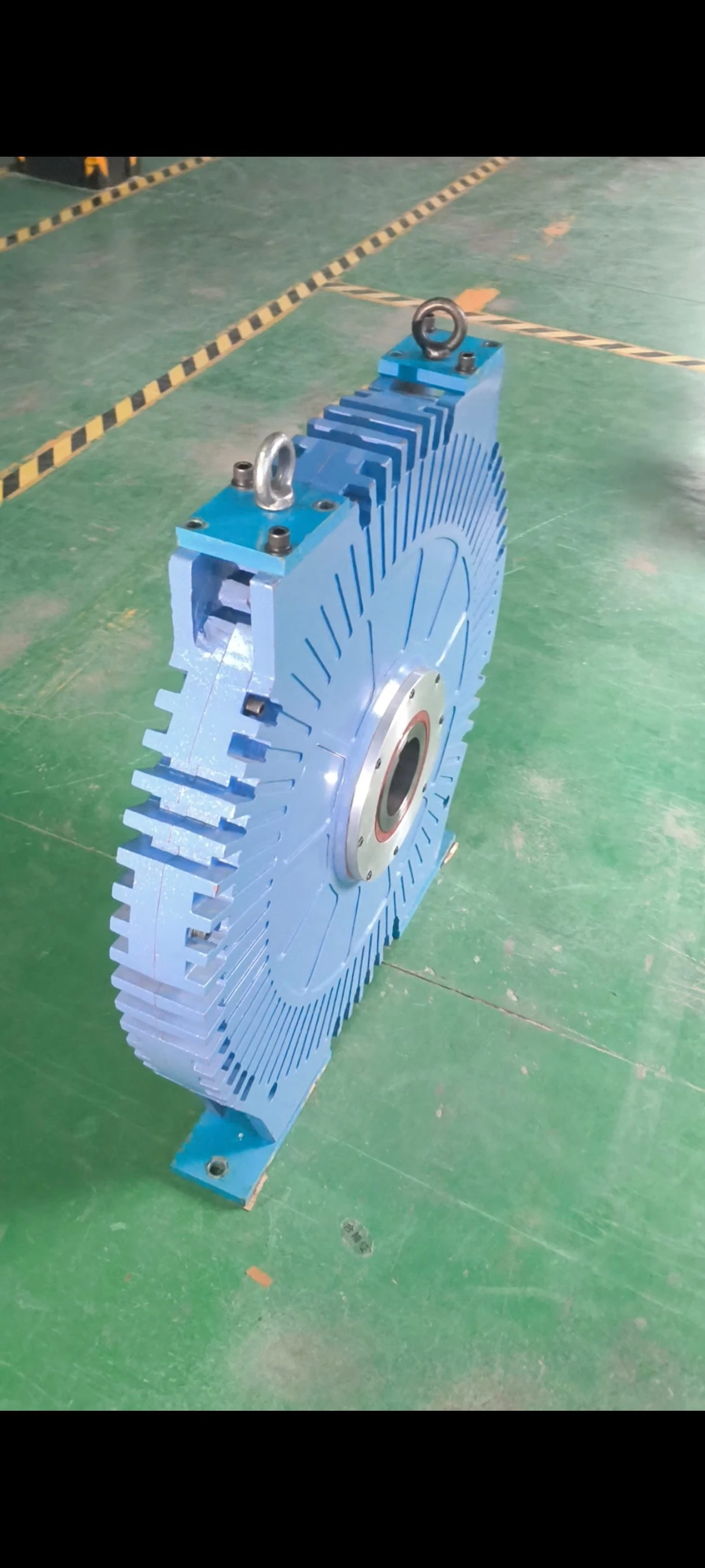
The product documentation specifically describes the disc structure as having a short axial dimension and being suitable for installations where axial space is limited, including direct connection to pumping-unit transmission equipment.
Compact Axial Length Can Change Machine Layout
Machine designers often focus on motor power and torque first.
Physical packaging sometimes becomes a problem only later.
An axial-flux motor can be useful when the available space is relatively wide in diameter but restricted along the shaft direction.
Typical examples may include:
- compact industrial drive modules;
- direct-drive machinery;
- equipment retrofits;
- mobile equipment;
- machines with limited drivetrain length.
Jiangnan's current disc-motor brochure includes a 7.5 kW industrial configuration operating at 1,450 rpm, together with 30 kW and 45 kW low-speed oilfield configurations. The brochure specifically positions the short axial form as useful for compact equipment layouts.
The important point is not that an axial motor is always smaller.
Its proportions are simply different.
A wider, flatter motor can solve packaging problems that a long cylindrical motor cannot.
What About Efficiency?
Permanent-magnet axial-flux motors can be designed for high efficiency.
Their short magnetic path and permanent-magnet excitation can reduce certain losses compared with some conventional motor structures.
However, efficiency should always be evaluated using the actual motor data and operating point.
Motor efficiency changes with:
- speed;
- load;
- winding design;
- magnetic materials;
- cooling;
- drive settings.
For an industrial buyer, the useful question is not: "Are axial-flux motors more efficient?"
A better question is: "What efficiency does this motor achieve at the speed and load where my machine normally operates?"
This distinction matters because many machines do not spend most of their operating time at exactly 100% rated load.
Jiangnan's own disc-motor development uses permanent magnets together with an axial-flux structure and nanocrystalline soft-magnetic materials in selected designs. The company materials describe the objective as reducing magnetic and winding losses while maintaining a compact structure.
For a real project, however, efficiency should be confirmed against the specific motor model rather than applying one percentage to the entire product family.
Does an Axial-Flux Motor Always Eliminate the Gearbox?
No.
This is another point that is often oversimplified.
An axial-flux motor can be designed for low-speed, high-torque operation, which may make direct drive possible in some machines.
But gearbox elimination depends on the required:
- output speed;
- continuous torque;
- peak torque;
- machine inertia;
- starting conditions;
- available installation space;
- drive-control strategy.
If the machine requires a very different speed range or transmission ratio, a gearbox may still be the better solution.
Direct drive is an application decision, not an automatic feature of every disc motor.
Thermal Design Still Matters
A short motor body does not remove the need for proper cooling.
High torque means high electromagnetic loading, and the generated heat still has to leave the motor.
Axial-flux designs can benefit from their large surface area, but actual thermal performance depends on the internal structure and cooling method.
Different industrial applications may use natural cooling, forced-air cooling or liquid cooling.
Jiangnan's current product range includes different cooling arrangements for axial-flux and permanent-magnet motor applications rather than one cooling method for every power level.
For OEM projects, the duty cycle and installation environment therefore need to be considered together with rated power.
Axial Flux Is Not Automatically Better Than Radial Flux
Radial-flux motors remain the right solution for a very large number of machines.
They have mature manufacturing processes, established frame standards, broad supplier availability and well-understood installation practices.
If a standard radial motor already meets the machine's requirements for size, efficiency, torque, cost and reliability, changing motor architecture may add unnecessary development work.
Axial flux becomes more interesting when the application has a specific reason to use it.
Typical reasons include:
- restricted axial installation space;
- low-speed, high-torque operation;
- interest in direct drive;
- high torque requirement within a compact package;
- weight or packaging constraints;
- a need to redesign the drivetrain rather than simply replace an existing standard motor.
This is why the machine should come first.
What Should an OEM Provide Before Selecting an Axial-Flux Motor?
A request such as "We need a 30 kW axial-flux motor" is a useful starting point, but it is not enough for final selection.
For an industrial project, the following information is more useful:
- rated power;
- rated speed;
- continuous torque;
- required peak torque;
- voltage;
- operating speed range;
- duty cycle;
- load characteristics;
- shaft dimensions;
- mounting method;
- maximum available motor diameter;
- maximum allowable axial length;
- cooling conditions;
- ambient temperature;
- protection requirement;
- drive or inverter information.
For an existing machine, photographs, a motor nameplate and a mechanical drawing can shorten the selection process significantly.
For a direct-drive conversion, information about the existing gearbox and final output speed is also important.
Jiangnan Electric Axial-Flux Motor Options
Hangzhou Jiangnan Electric Motor Co., Ltd. currently offers axial-flux electric motors, conventional PMSMs and other permanent-magnet motor platforms for industrial applications.
The current JNPM family covers both low-speed, high-torque and higher-speed operating points. Examples include:
|
Model |
Rated Power |
Rated Speed |
Rated Torque |
|
JNPM275-2 |
2 kW |
330 rpm |
58 N·m |
|
JNPM275-7.5 |
7.5 kW |
1,450 rpm |
49 N·m |
|
JNPM275-15 |
15 kW |
3,000 rpm |
48 N·m |
|
JNPM520-30 |
30 kW |
245 rpm |
1,169 N·m |
|
JNPM520-45 |
45 kW |
245 rpm |
1,754 N·m |
|
JNPM350-75 |
75 kW |
1,500 rpm |
478 N·m |
The motor should still be selected from the actual machine requirement rather than from power alone.
For OEM development and retrofit projects, Jiangnan Electric can review the customer's speed, torque, installation envelope, drive system and mechanical interface before recommending an appropriate configuration.
Choose the Motor Architecture Around the Machine
The main difference between axial-flux and radial-flux motors is not simply shape.
The different electromagnetic geometry changes how the motor can be packaged and how torque can be developed within that package.
For a conventional machine with standard mounting and plenty of installation space, a radial-flux motor may remain the most practical choice.
For a machine where axial length, low-speed torque or drivetrain simplification matters, an axial-flux motor may provide a useful alternative.
The best decision starts with the machine: required torque → required speed → available space → drivetrain → duty cycle → cooling → motor architecture.
Once those conditions are clear, it becomes much easier to decide whether a disc motor is genuinely useful or simply different.
Hangzhou Jiangnan Electric Motor Co., Ltd. | www.jnelectricmotor.com
Disclaimer
The information in this article is provided for general reference only. Product specifications, performance, configuration options and suitability must be evaluated in detail for the intended application and actual operating conditions. Before selecting, purchasing or using a product, please confirm the relevant details with Jiangnan Electric and refer to the applicable technical documentation and agreed specifications. This article does not replace product-specific instructions or a professional engineering assessment.