Servo Motor Stator Construction:
Why Resin Molding Matters
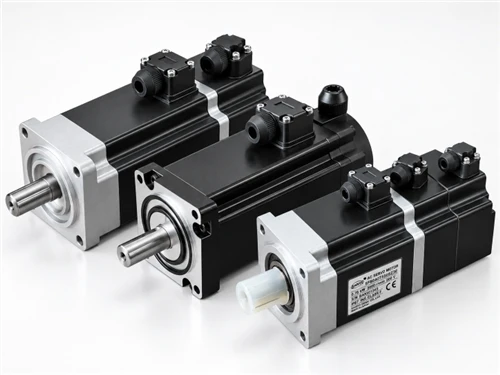
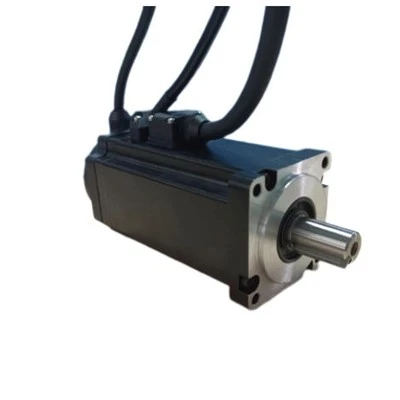
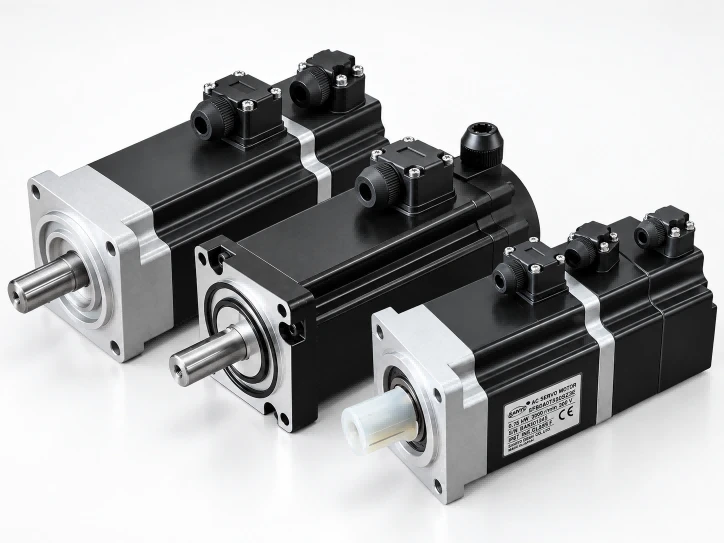
The shaft, flange and connectors are easy to compare on a servo motor drawing. The winding assembly inside the motor is less visible, but its construction deserves a place in the buying discussion.
Our A/B low-inertia servo range includes resin-molded stator construction. The catalog identifies heat dissipation as one of its intended benefits. For Jiangnan Electric, this is a useful detail to explain alongside the motor's electrical ratings, rather than leave as an unfamiliar phrase in the feature list. [1]
What Is Actually Molded?
The stator is the stationary part of the motor that carries the windings. Resin molding encapsulates the winding assembly in a selected resin material. It does not replace the copper conductors or mean that the entire motor is made of plastic.
Encapsulation materials can provide electrical insulation and, when selected for suitable thermal properties, help transfer heat out of the winding assembly. The material and the way it is incorporated into the motor matter; the word "resin" alone does not specify a thermal performance level. [2]
Heat Still Needs a Route Out
A motor produces heat during operation. Improving the route from the windings to the surrounding motor structure can help manage winding temperature, but that heat must still leave the motor. Resin molding is part of a thermal design, not a cooling system on its own. [2][3]
For a machine builder, the practical question is how the complete motor behaves during the intended working cycle. An axis running repeatedly inside a compact enclosure deserves a different review from a brief demonstration on an open test bench. Describe the load, running time, mounting arrangement and surrounding temperature when discussing the application.
Resin Is Only One Part of the Stator Build
Our catalog discusses winding arrangement and integrated stator welding separately from resin molding. It describes neatly arranged windings and a welded stator structure, as well as the molded construction. These should be read as distinct design features, not several names for the same process. [1]
This is how we suggest reviewing the product: consider the winding assembly, its construction and the finished motor ratings together. There is no need to specify a resin recipe in an ordinary motor inquiry. There is a need to explain what the machine will ask the motor to do.
Put the Construction Beside a Specific Rating
The 400 W entry in our 60A catalog gives the discussion a concrete starting point. It belongs to the A-Series range described above.
|
Catalog parameter |
Listed value |
|
Motor model |
SF60A04030C2014 |
|
Drive voltage |
220 V |
|
Rated power |
0.4 kW (400 W) |
|
Rated torque |
1.27 N·m |
|
Rated speed |
3,000 rpm |
Source: Jiangnan / Zhongke Servo English catalog, PDF page 26 (printed page 17). Values apply to the listed configuration; the drive-voltage entry is not an instruction for direct mains connection. [1]
The construction detail belongs beside these ratings, not in place of them. It does not authorize extra continuous torque beyond the approved specification. The cited catalog pages do not quantify a temperature reduction from resin molding, so we do not attach one to this example.
Agree on What a Thermal Comparison Means
A claim that one motor runs cooler is useful only when the comparison identifies the operating conditions. Ask which load and speed were used, how the motor was mounted, what the surrounding temperature was and where temperature was measured. Continuous operating capability is tied to the motor's thermal limits. [3]
For an OEM evaluation, agree on a representative repeated cycle and an appropriate test duration. Record the motor and drive configuration, mounting conditions and measurement method. Compare the result with the approved limits for that configuration, rather than inferring winding temperature from touch or from an unspecified housing reading.
Bring the Construction Question to Jiangnan
Our servo motor portfolio provides finished motor configurations for application review. When contacting Jiangnan Electric, include the selected model or required operating point and show how the motor will be installed. Add the expected duty cycle and drive information, especially where space or heat removal is a concern. [1][4]
Resin-molded stator construction is a detail worth understanding because it concerns the winding assembly inside the motor. Its value for a buyer comes from how that construction supports the specified motor in the intended application, not from treating a manufacturing feature as an additional performance rating.

References
The numbered entries below correspond to citations in the article. Retain this source list when publishing.
[1] Jiangnan / Zhongke Servo - English Servo Motor Catalog
Company-supplied 61-page edition. PDF page 10 (printed page 1): low-inertia range construction features and A/B platforms. PDF page 26 (printed page 17): SF60A04030C2014 data. PDF page 2: application-review and support scope. Product numbers in this article follow this catalog.
[2] Huntsman - Stator Encapsulation and Impregnation
General background on electrically insulating encapsulation materials, thermal properties and heat transfer. No Huntsman material specification, test percentage or supply relationship is claimed for Jiangnan products.
Huntsman: Stator Encapsulation and Impregnation
www.huntsman-transportation.com/EN/applications/applications-for-electronics/stator.html
[3] Kollmorgen - How to Select a Servo Motor
28 October 2020. Background on continuous motor capability, winding temperature, ambient conditions and application-based selection. No competitor model data or case study is reproduced.
Kollmorgen: How to Select a Servo Motor
www.kollmorgen.com/en-us/blogs/how-to-select-a-servo-motor
[4] Hangzhou Jiangnan Electric Motor Co., Ltd. - Servo Electric Motors
Company product-range and inquiry reference. Website specifications do not replace the cited catalog values.
Disclaimer
The information in this article is provided for general reference only. Product specifications, performance, configuration options and suitability must be evaluated in detail for the intended application and actual operating conditions. Before selecting, purchasing or using a product, please confirm the relevant details with Jiangnan Electric and refer to the applicable technical documentation and agreed specifications. This article does not replace product-specific instructions or a professional engineering assessment.