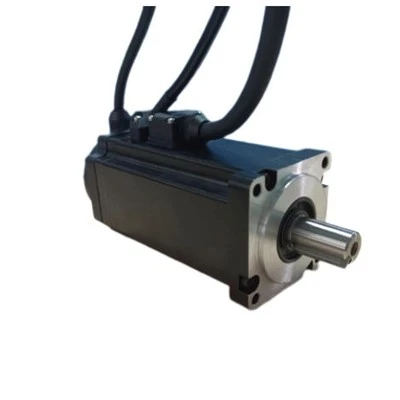
As a supplier of Plastic Package Motors, I understand the importance of speed control in various applications. Plastic Package Motors are widely used in different industries due to their compact size, high efficiency, and reliable performance. In this blog, I will share some effective methods to control the speed of a Plastic Package Motor.
1. Voltage Control
One of the simplest and most common methods to control the speed of a Plastic Package Motor is by adjusting the applied voltage. According to the basic principle of motor operation, the speed of a motor is approximately proportional to the applied voltage. By reducing the voltage, the motor speed will decrease, and increasing the voltage will result in a higher speed.
However, it's important to note that this method has its limitations. If the voltage is too low, the motor may not be able to start or may operate unstably. On the other hand, applying excessive voltage can cause overheating and damage to the motor. Therefore, it's crucial to stay within the rated voltage range specified by the motor manufacturer.
When using voltage control, you can use a variable power supply or a voltage regulator. A variable power supply allows you to adjust the output voltage continuously, while a voltage regulator can maintain a stable output voltage under different load conditions.
2. Pulse Width Modulation (PWM)
Pulse Width Modulation is a more advanced and precise method for controlling the speed of a Plastic Package Motor. This technique involves switching the power supply to the motor on and off at a high frequency. The ratio of the on-time to the total period (known as the duty cycle) determines the average voltage applied to the motor.
By adjusting the duty cycle, you can effectively control the speed of the motor. A higher duty cycle means a longer on-time and a higher average voltage, resulting in a higher motor speed. Conversely, a lower duty cycle leads to a lower average voltage and a slower motor speed.
PWM control offers several advantages. It provides smooth speed control, high efficiency, and low power consumption. Additionally, it can reduce the electromagnetic interference (EMI) generated by the motor. To implement PWM control, you need a PWM controller, which can be a dedicated integrated circuit or a microcontroller programmed to generate the appropriate PWM signals.
3. Frequency Control
For AC Plastic Package Motors, frequency control is an effective way to adjust the motor speed. The speed of an AC motor is directly proportional to the frequency of the power supply. By changing the frequency, you can change the motor speed accordingly.
A variable frequency drive (VFD) is commonly used to control the frequency of the power supply to the motor. A VFD can convert the fixed-frequency AC power from the mains into a variable-frequency AC power. It allows you to adjust the frequency and voltage simultaneously to maintain a constant volts-per-hertz ratio, which is essential for the proper operation of the motor.
Frequency control offers precise speed control over a wide range. It also provides energy savings, especially in applications where the motor operates at variable loads. However, VFDs can be relatively expensive and may require additional installation and maintenance.


4. Gearboxes and Belts
In some cases, mechanical methods such as gearboxes and belts can be used to control the speed of a Plastic Package Motor. A gearbox can change the speed and torque of the motor output by using different gear ratios. By selecting the appropriate gear ratio, you can achieve the desired speed reduction or increase.
Belts can also be used to transmit power from the motor to the load. By using different pulley sizes, you can change the speed ratio between the motor and the load. This method is simple and cost-effective, but it may have some limitations in terms of speed control accuracy and efficiency.
5. Feedback Control Systems
To achieve more accurate and stable speed control, feedback control systems can be employed. A feedback control system uses sensors to measure the actual speed of the motor and compares it with the desired speed. Based on the difference between the two, the control system adjusts the input to the motor to minimize the error.
Common sensors used in feedback control systems include encoders, tachometers, and Hall effect sensors. Encoders provide high-resolution position and speed information, while tachometers measure the rotational speed of the motor shaft. Hall effect sensors can detect the magnetic field changes in the motor and provide speed feedback.
A proportional-integral-derivative (PID) controller is often used in feedback control systems. A PID controller calculates the error between the desired and actual speeds and generates a control signal based on the proportional, integral, and derivative terms. This control signal is then used to adjust the input to the motor to maintain the desired speed.
Applications of Speed Control in Plastic Package Motors
The ability to control the speed of a Plastic Package Motor is essential in many applications. Here are some examples:
- HVAC Systems: In heating, ventilation, and air conditioning systems, Plastic Package Motors are used to drive fans and blowers. Speed control allows for precise adjustment of the airflow, which is important for maintaining a comfortable indoor environment and energy efficiency.
- Industrial Automation: In industrial automation, Plastic Package Motors are used in conveyor belts, robotic arms, and other equipment. Speed control enables these machines to operate at different speeds depending on the specific task, improving productivity and flexibility.
- Home Appliances: Many home appliances, such as refrigerators, washing machines, and vacuum cleaners, use Plastic Package Motors. Speed control can enhance the performance and energy efficiency of these appliances, providing a better user experience.
Conclusion
Controlling the speed of a Plastic Package Motor is crucial for achieving optimal performance in various applications. There are several methods available, including voltage control, PWM, frequency control, mechanical methods, and feedback control systems. Each method has its own advantages and limitations, and the choice of method depends on the specific requirements of the application.
As a supplier of Plastic Package Motor, we offer a wide range of motors with different speed control options. Our Plastic Encapsulated Fan Motor and BLDC Plastic Sealed Motor are designed to meet the diverse needs of our customers.
If you are interested in our products or have any questions about speed control of Plastic Package Motors, please feel free to contact us for a detailed discussion and procurement negotiation. We are committed to providing high-quality products and excellent customer service.
References
- Electric Machinery Fundamentals by Stephen J. Chapman
- Variable Frequency Drives: Selection, Application, and Maintenance by Bimal K. Bose
- Pulse Width Modulation for Power Converters: Principles and Practice by Ned Mohan